
Body Language & Threshold
Learning to decipher your companion's body language is part of being a responsible owner! Dogs communicate with their posture, facial expressions, ear position, and many other forms of body language and it is up to us to communicate with them effectively. Learning to communicate appropriately with your dog will help you to create a better bond and trust with them, as well as allows you to advocate for your dog in stressful situations.
Dogs do not typically escalate to aggression without first giving off SEVERAL warning signs that they are uncomfortable. Understand that sudden displays of aggression are oftentimes our dog's last resort for communicating with us and unfortunately, it is the only one that humans can understand immediately if they do not have knowledge of subtle body language in dogs.
The most important thing is to NEVER punish a growl!
WHY? Our dogs are trying to communicate with us and this takes away their voice. If a dog's other subtle cues are ignored and disregarded repeatedly, a dog may more readily resort to growling - and if growls are then punished or suppressed, the only place left to go is biting. This can create situations where dogs start giving no warning at all before biting because they've learned they will be punished repeatedly. The ONLY way a dog is capable of communicating is through their body, so the quicker we guardians learn what they're trying to tell us, the more trust we can establish and the safer and happier everyone will be.

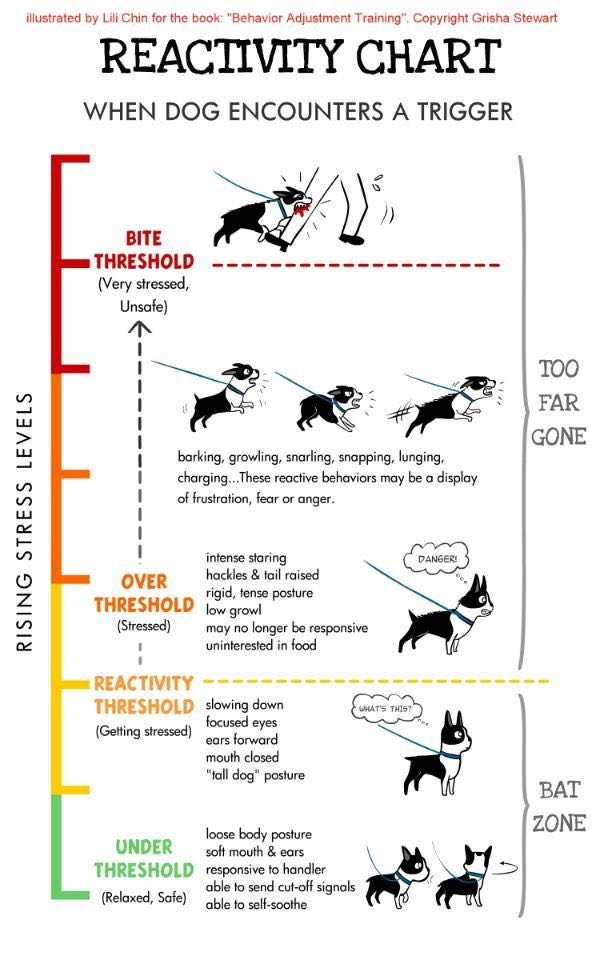
The charts above detail threshold levels in dogs. If you have ever heard the expression "the straw that broke the camel's back", that is how threshold levels work. Similar to humans, dogs can have bad days too where they have experienced a lot of over-stimulation which causes our dogs to trigger stack throughout the day. For example, maybe you left for a long time that day and it was out of the ordinary. On top of that, maybe you had 3 deliveries to your home, a serviceman stopped by, and then you entertained some guests - all of these tiny little things can cause our dogs to stay in elevated stress levels in which they cannot fully recover from in a day. Always be aware of your dog's emotional state throughout the day and especially before attempting to train using triggers. Some dogs are very resilient emotionally and can recover quickly and other dogs can more readily (and sometimes explosively) trigger stack and cross threshold. If you have a dog like that, it is possible they may be dealing with fear and/or anxiety and a conversation with your veterinarian may be recommended.

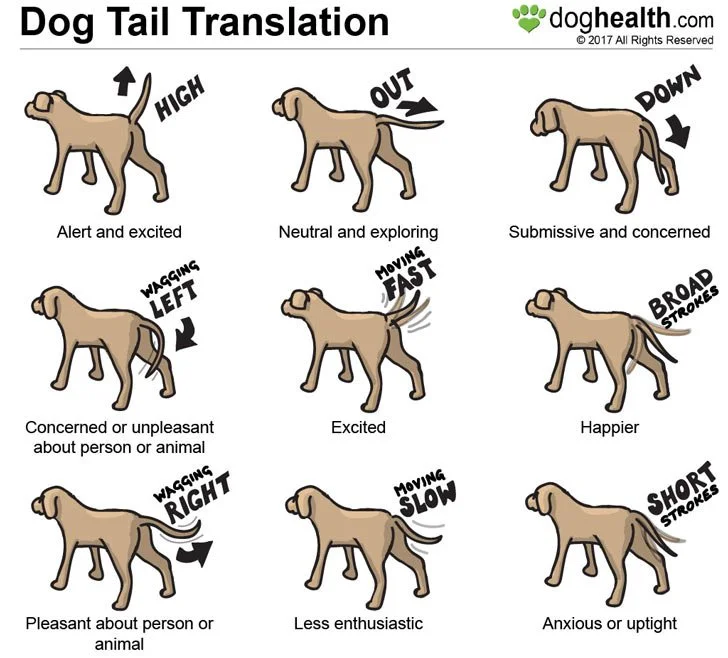
You should also know that not every tail wag is happy!
Learn to read the position of your dog's tail during interactions to gauge their emotional state.
So many bites are PREVENTABLE!
It should come as no surprise that some of the natural things we do as humans with our own body language or to convey friendliness are actually threatening or scary to dogs. Avoid the following: direct eye contact, direct body language, leaning over them, smiling with our teeth, giving hugs/kisses, reaching out to pet (especially on the top of the head), and the unfortunate viral phenomenon of barking directly at/in your dog's face.
In studies, children and infants are significantly more likely to be bitten by dogs than adults, however, adults are more likely to be bitten severely. Researchers have analyzed 143 YouTube videos lasting more than five seconds, paying careful attention to the context of bites, bite severity, and victim and dog characteristics. What they found is that appeasement behaviors (like the ones in the “Anxiety and Fear” infographic above) increased roughly 20 seconds before the bite and that humans made more tactile contact with dogs 21 seconds before the bite. Standing over a dog, petting, and restraining a dog were seen proportionally more frequently, increasing approximately 20–30 seconds before the bite occurred. Source
Speaking of children...It is crucial that children are taught early on what is the appropriate way to greet and interact with dogs to avoid accidents happening!
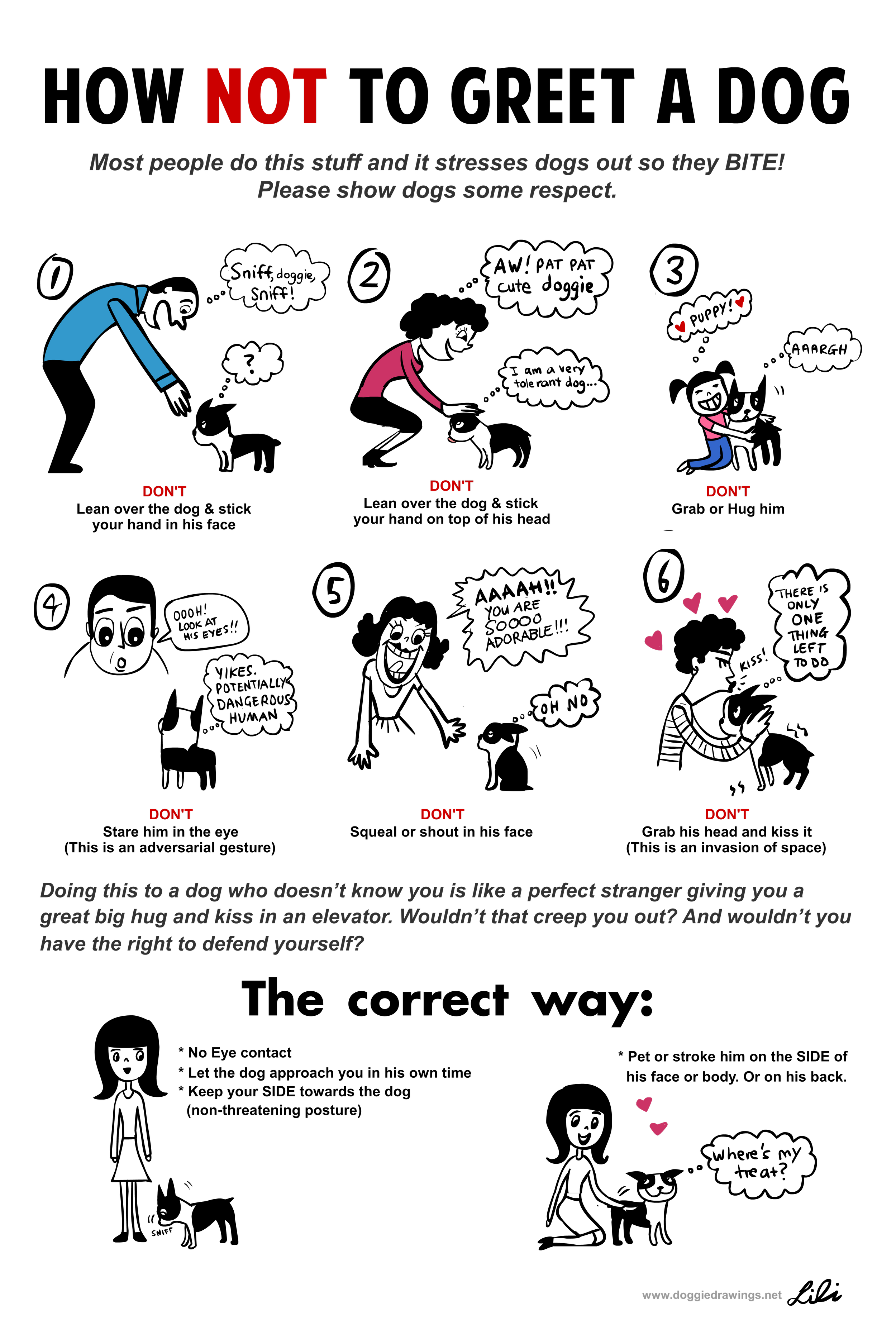

Set everyone up for success and ensure that you can watch your dog's body language and comfort closely using these methods below:


Learn about the Spectrum of Fear, Anxiety, and Stress (FAS) through Fear Free Pets. Use the directional arrows on the handouts to view other species, such as cats.
Contact me today to get started on your learning journey. I have so much more to share with you!